
Plane wave
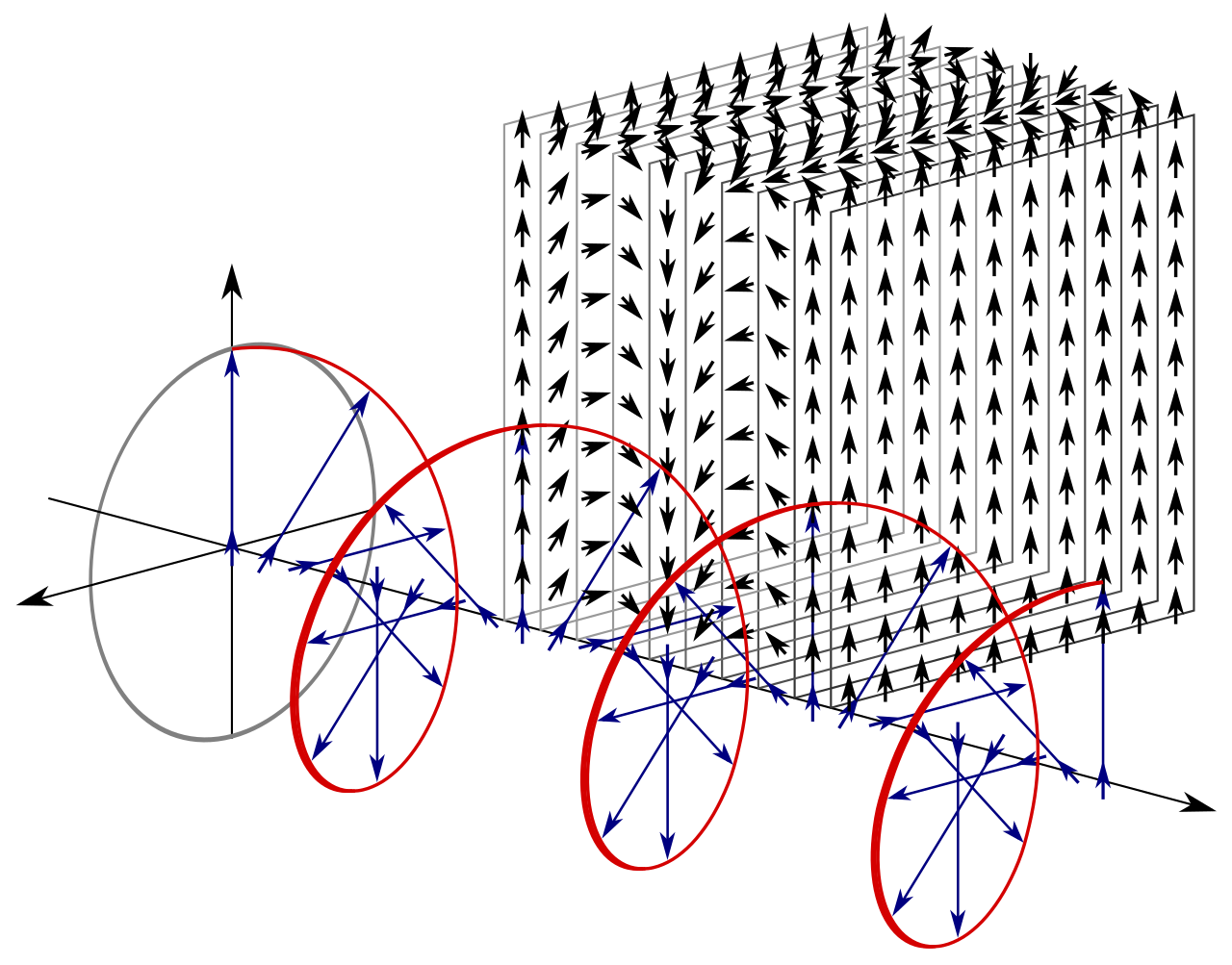
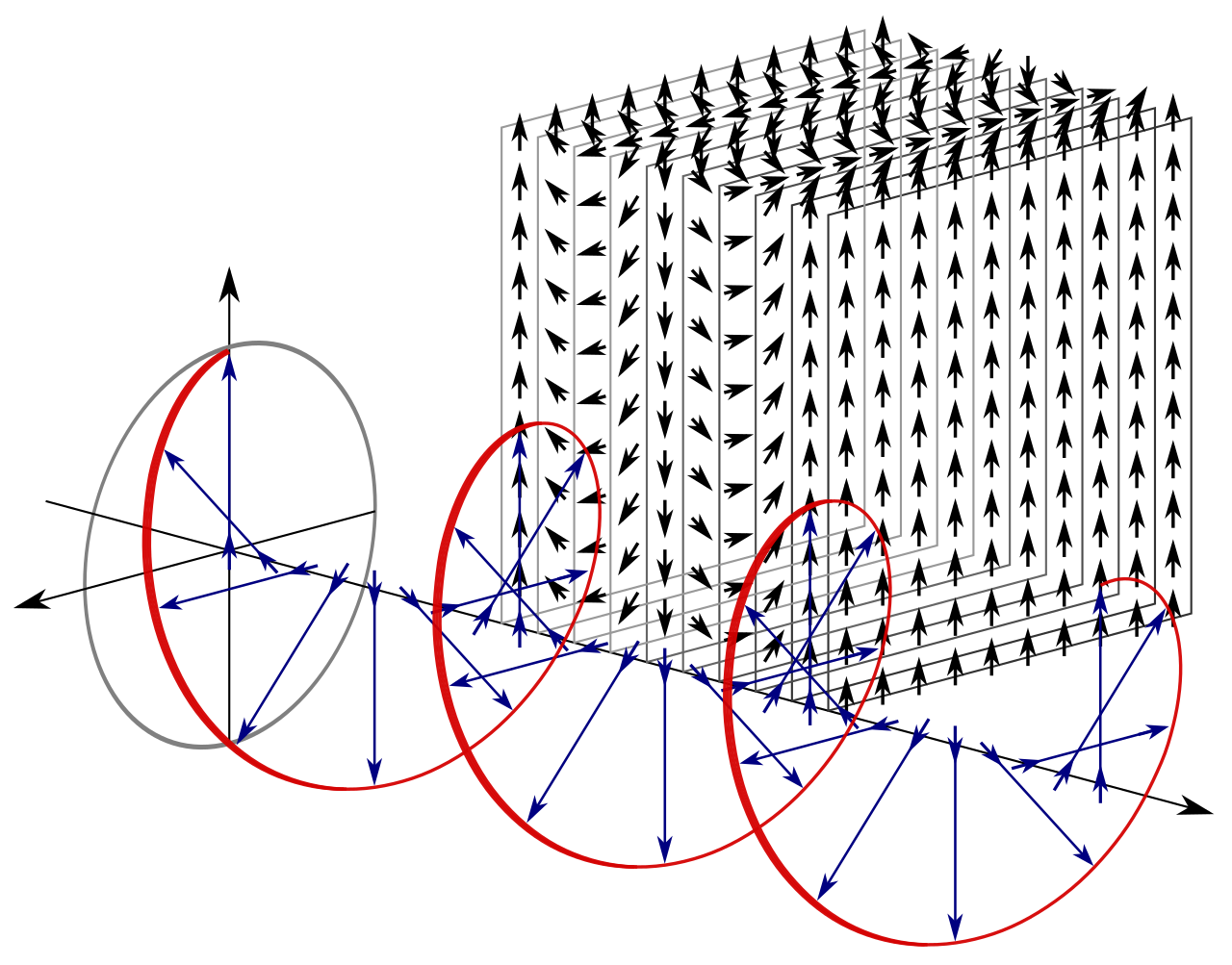
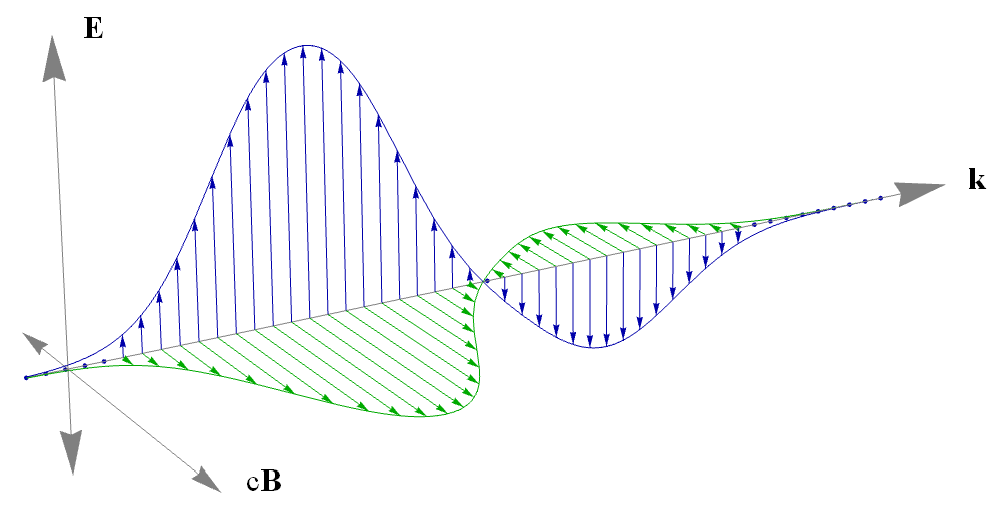
A wave model with constant value on perpendicular planes.

Dave3457 · Public domain
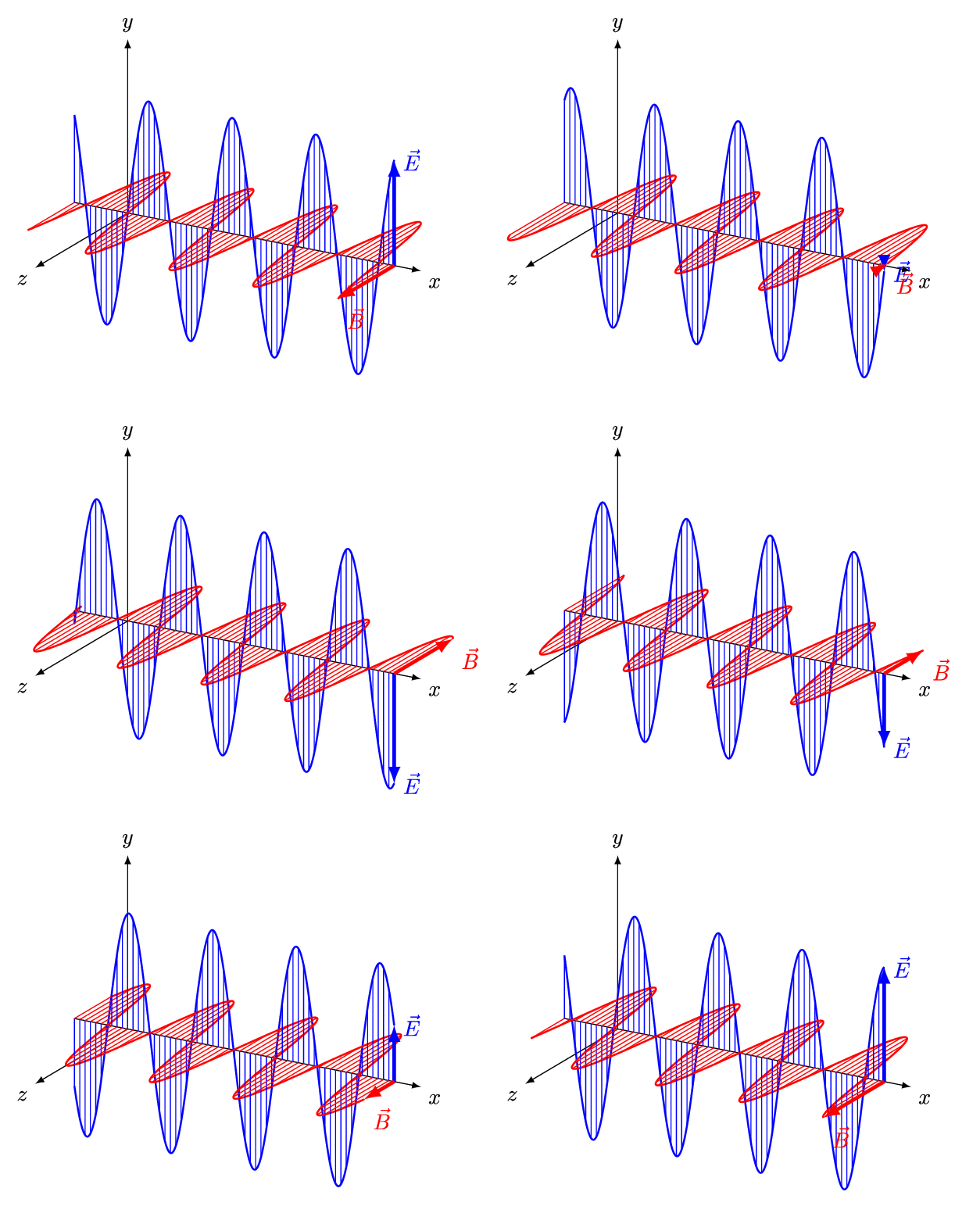
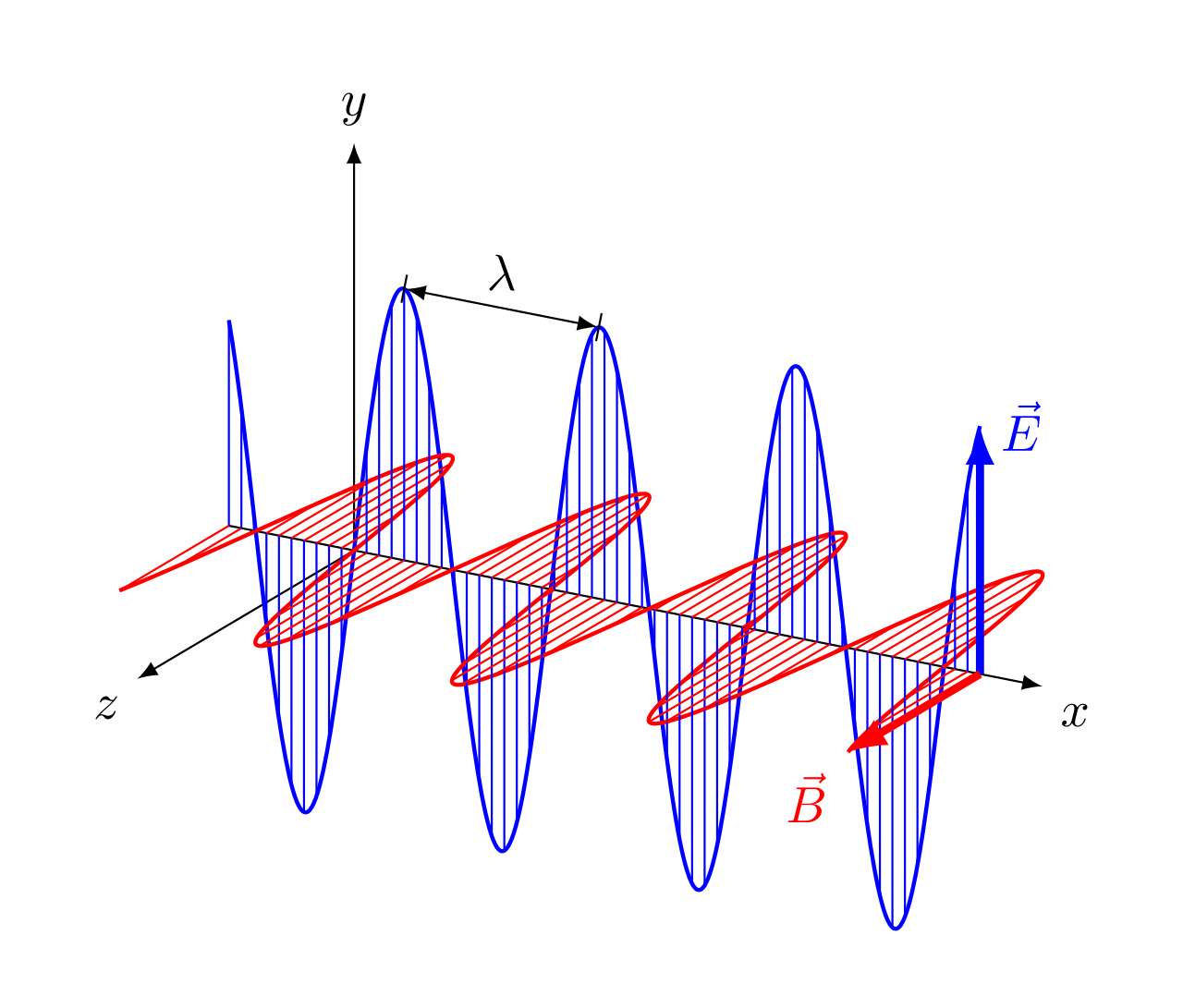
In physics, a plane wave is a special case of a wave or field where the value of the physical quantity is constant through any plane perpendicular to a fixed direction in space. The field can be expressed as a function of only two parameters: time and the scalar displacement along that direction. Plane waves are a fundamental model in physics, widely used to approximate waves from distant sources, such as light from stars, despite the fact that a true plane wave cannot physically exist because it would have to fill all space.
- field
- Physics
- known_for
- Model of waves with constant value on planes perpendicular to a fixed direction; includes traveling, sinusoidal, and standing plane waves
Lore & Background
More specifically, a sinusoidal plane wave is a traveling plane wave with a sinusoidal profile, characterized by amplitude, spatial frequency, and phase shift. A plane standing wave is a field that can be expressed as the product of a function of position and a function of time. The plane wave model is important and widely used, even though a true plane wave cannot physically exist because it would have to fill all space.
Reader's Guide
The plane wave model is a cornerstone of theoretical physics, providing a simplified yet powerful representation of wave phenomena. Its significance lies in its ability to describe waves in terms of a single spatial dimension and time, reducing complex three-dimensional problems to manageable forms. The model is essential for understanding wave propagation, interference, and diffraction, and it serves as the basis for more advanced concepts such as wave packets and Fourier analysis. In practice, plane waves approximate the behavior of waves from distant sources, such as starlight entering a telescope, where the wavefronts are nearly planar over a small region. The distinction between longitudinal and transverse plane waves is crucial in fields like acoustics and electromagnetism, where it determines the nature of wave interactions with matter. Despite its idealization, the plane wave model remains indispensable for teaching, research, and engineering applications, from optics to quantum mechanics.
Did You Know?
- A plane wave's value is constant through any plane perpendicular to a fixed direction in space.
- A true plane wave cannot physically exist because it would have to fill all space.
- In a traveling plane wave, the field translates at constant wave speed along the direction perpendicular to the wavefronts.
- A sinusoidal plane wave is characterized by amplitude, spatial frequency, and phase shift.
Gallery

Frequently Asked Questions
What is a plane wave in optics?
A plane wave is a wave model in which the field value stays the same across every plane that is perpendicular to one fixed propagation direction. In practice, the field is described using just two variables: time and the scalar distance along that direction.
Can a true plane wave actually exist in nature?
No. A perfect plane wave would need to extend infinitely in all directions, meaning it would have to occupy all of space at once, which is physically impossible. That is why it remains a mathematical idealization rather than a realizable physical object.
What types of plane waves do photonics fans talk about?
The usual categories are traveling plane waves, sinusoidal plane waves, and standing plane waves. Each differs in how the field varies with time and position along the propagation axis, but all share the constant-value-on-perpendicular-planes property.
Why do physicists use plane waves to model starlight or laser beams?
When a source is very far away, the spherical wavefronts it emits look almost flat over the region of interest, so a plane-wave approximation becomes extremely accurate. This simplification lets researchers write down clean analytic expressions without tracking curvature.
Why is the plane-wave model considered foundational in optics and photonics?
It reduces a three-dimensional wave problem to a one-dimensional one along the propagation axis, making diffraction, interference, and polarization calculations tractable. Nearly every more complex optical field is built up as a superposition of plane-wave components.
More in Optics And Photonics 25-34
Elsewhere in the Optics And Photonics universe
Spotted an error? Know more?
This is a living reference — every entry is fact-audited, and reader corrections feed straight into our audit queue. Suggest an edit · See this site's audit record