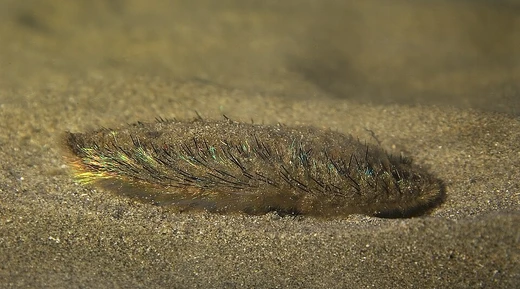
Iridescence
Color that shifts with angle, caused by light interference.

Furnaminaly · CC BY-SA 4.0
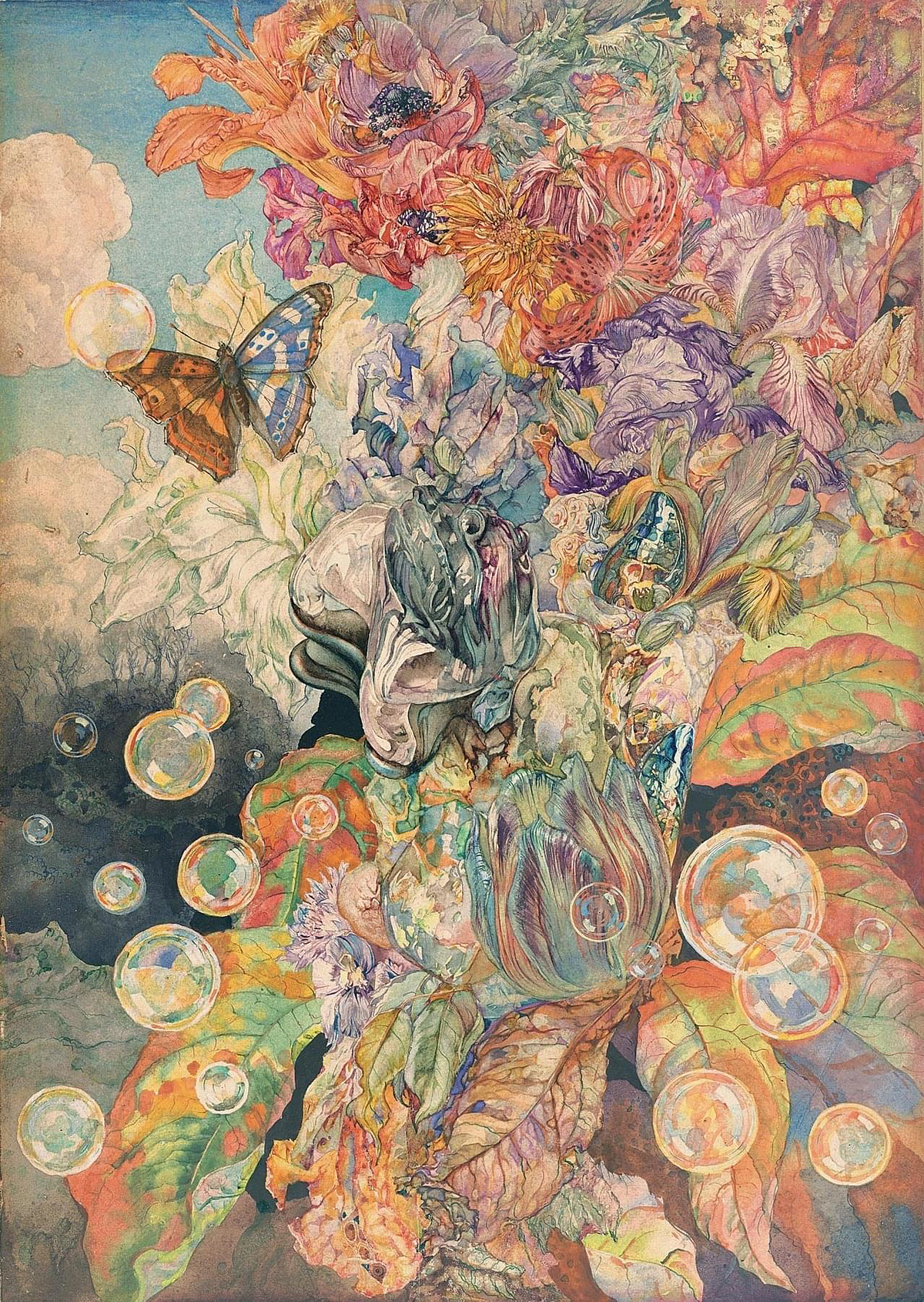
Iridescence, also known as goniochromism, is the optical phenomenon in which a surface appears to gradually change color as the angle of view or illumination changes. It results from wave interference of light in microstructures or thin films, and is observed in natural and human-made objects such as soap bubbles, feathers, butterfly wings, seashell nacre, opal, and certain automotive paint finishes.
- field
- Optics, Materials Science, Biology
- known_for
- Color change with viewing angle due to structural coloration
- mechanism
- Wave interference in microstructures or thin films
- examples
- Soap bubbles, butterfly wings, peacock feathers, opal
- related_effect
- Pearlescence (some reflected light is white)
Lore & Background
The word iridescence derives from the Latin word 'iris' (rainbow) and the Latin suffix '-escent' (tending toward), referencing the goddess Iris, personification of the rainbow. The term goniochromism comes from Greek 'gonia' (angle) and 'chroma' (color). Iridescence is fundamentally wave interference (thin-film interference or structural coloration), where the intensity of reflected light varies with direction and frequency, often due to multiple reflections from semi-transparent surfaces causing phase shift and interference. In biology, iridescence is a form of structural coloration, distinct from pigment-based color. Later research revealed iridescence in peacock feathers arises from a complex photonic crystal. Iridescence also occurs in plants like Begonia pavonina, whose leaves appear azure due to layered photosynthetic structures called iridoplasts, and in animals such as the peacock spider Maratus robinsoni and the gecko Cnemaspis kolhapurensis.
Reader's Guide
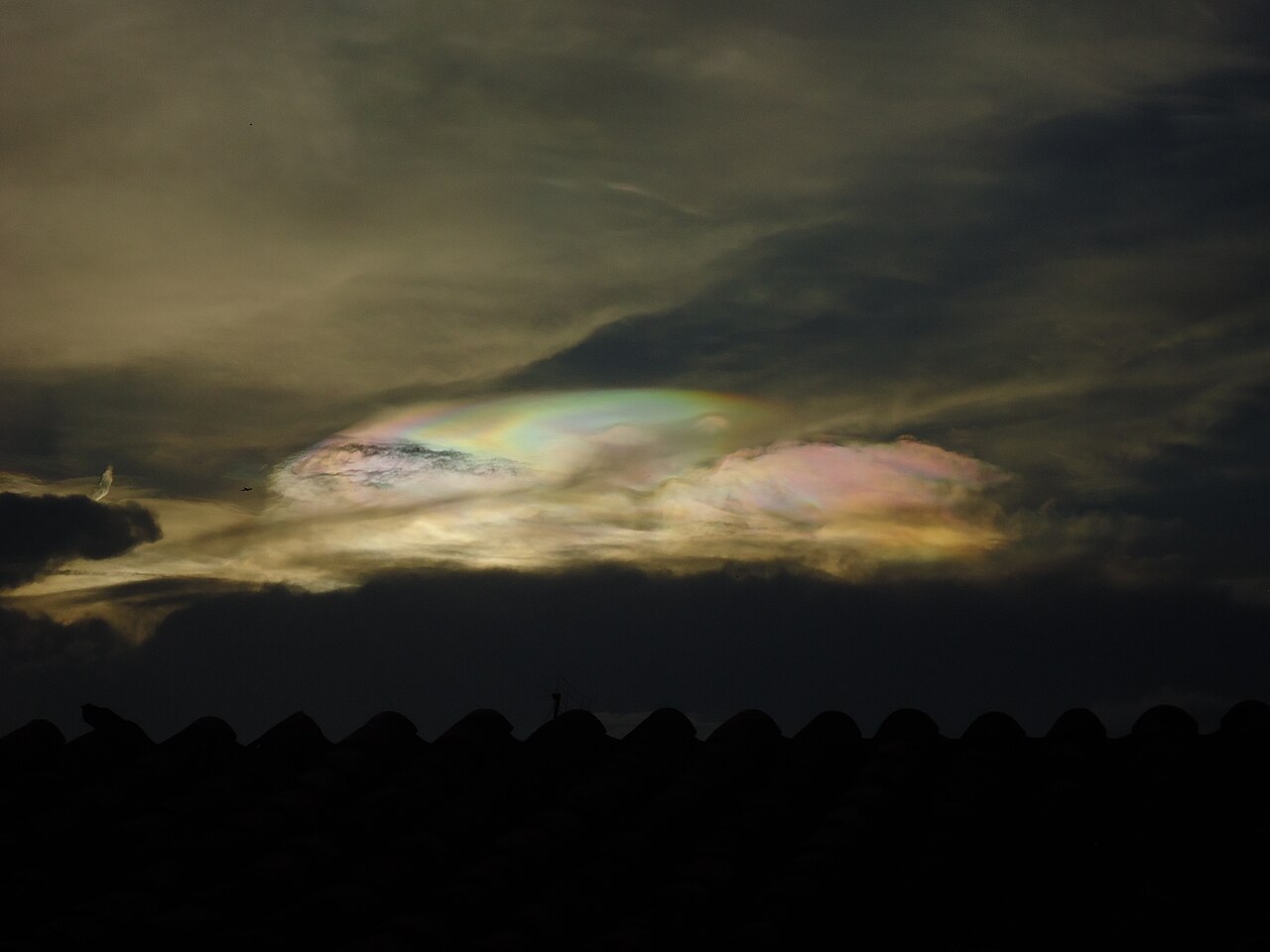
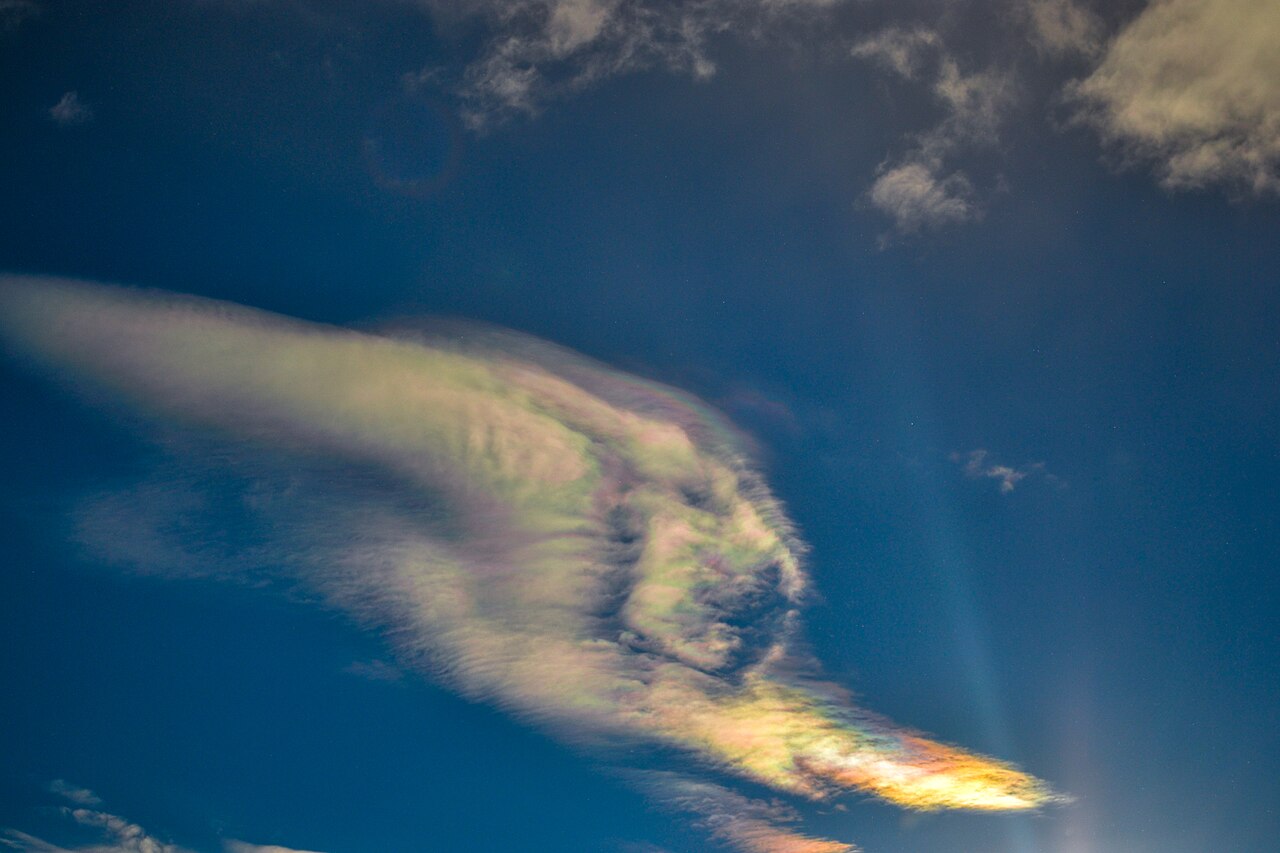
Iridescence is significant as a natural optical phenomenon that demonstrates how microstructure can manipulate light without pigments. It appears in diverse contexts: in biology, it provides coloration for communication or camouflage; in materials science, it inspires biomimetic designs for paints and coatings. The phenomenon is also observed in non-biological settings, such as thin films of oil on water, CDs, DVDs, and cloud iridescence. Pearlescence, a related effect where some reflected light is white, is commonly used in automotive paints. Understanding iridescence has advanced knowledge of structural coloration, with applications ranging from anti-counterfeiting to display technologies. The study of iridescence continues to reveal how natural structures achieve vivid, angle-dependent colors, informing both evolutionary biology and engineering.
Did You Know?
- Iridescence in peacock feathers is due to a complex photonic crystal, not pigments.
- The word iridescence derives from the Latin word 'iris' and the Latin suffix '-escent', referencing the goddess Iris, personification of the rainbow.
- Some flower petals generate diffraction gratings, but the iridescence is masked by plant pigments and not visible to humans.
- The lateral line on the neon tetra is iridescent.
Gallery



Frequently Asked Questions
What is Iridescence?
Iridescence, also called goniochromism, is an optical effect in which a surface appears to shift through different colors as you change the viewing angle or the direction of illumination. The color change is produced by the material's physical structure rather than by any dye or pigment.
What causes the color-shifting in Iridescence?
Light waves reflected from multiple layers or microstructures within a material recombine through wave interference. Because the effective path-length difference changes with angle, different wavelengths are constructively reinforced, so the perceived hue rotates as you tilt the object.
Where can I see Iridescence in everyday life?
Classic examples include the rainbow sheen on soap bubbles, the vivid angles of peacock and butterfly wings, the color play inside opal, and the metallic flakes in certain automotive paints. Seashell nacre, or mother-of-pearl, is another well-known natural instance.
How does Iridescence differ from Pearlescence?
Both rely on structural coloration, but pearlescence specifically retains a portion of the reflected light as white, producing a soft lustrous glow, while iridescence emphasizes the full angular hue shift. In many real-world samples the two effects overlap, yet the white-light component is what distinguishes pearlescence.
Why is Iridescence important in optics and materials science?
Grasping the interference mechanism behind iridescence lets engineers design thin-film coatings, security inks, and bio-inspired photonic components. It also gives biologists a window into how organisms achieve brilliant, pigment-free coloration without relying on chemical dyes.
More in Optics And Photonics 1-24
Elsewhere in the Optics And Photonics universe
Spotted an error? Know more?
This is a living reference — every entry is fact-audited, and reader corrections feed straight into our audit queue. Suggest an edit · See this site's audit record